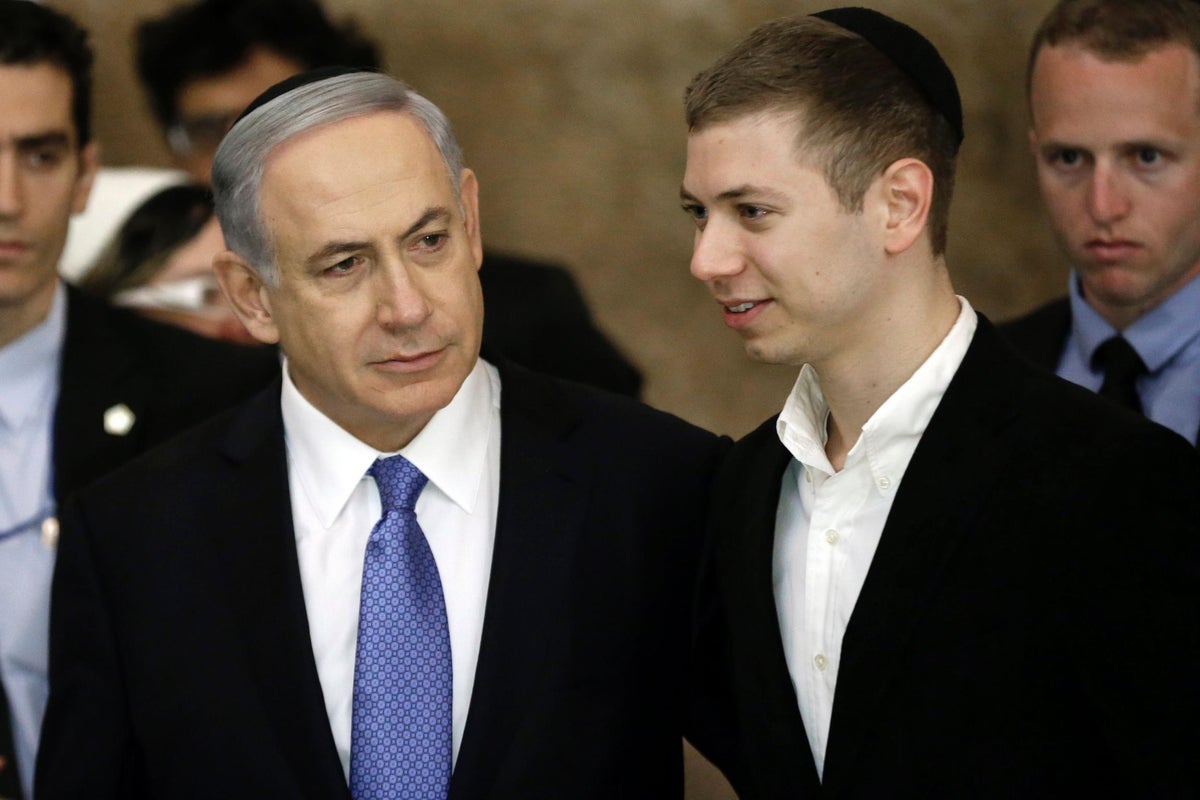
Benjamin Netanyahu’s son is facing a growing backlash after declaring his support for Argentina’s claim to the Falkland Islands and lashing out at Britain over its “hypocrisy and hostility towards Israel”.
Yair Netanyahu, the second son of the Israeli prime minister, wrote on X that the islands in the South Atlantic “belong to Argentina” after Donald Trump said the US position on the islands was under review.
His post drew criticism from across Britain’s political spectrum, including from Rupert Lowe of the far-right Restore Britain party, who said that it was “entirely legitimate” to question Israel’s official position on the sovereignty of the Falklands in light of the comments.
Yair Netanyahu doubled down with a post saying Israel should “stop recognising the Malvinas” – the Argentine name for the islands – only once Britain stops “recognising Palestine”.

The Israeli podcaster, 35, went on to condemn “British hypocrisy and hostility towards Israel with their recognition of ‘Palestine’ on half of our land and capital city!”, adding: “Your country is being occupy [sic] by radical Islam! Mind your own business!”
Netanyahu also drew an equivalence between Israel’s prosecution of the war in Gaza in response to the October 7 attacks and Britain’s attacks on Germany during World War II, which he said killed “millions” of German civilians.
“Since the biggest massacre of Jews since the Holocaust on October 7, we have experienced nothing but hostility, antisemitism, and blood libels from your government,” he asserted. “An alliance goes both ways.”
Under Sir Keir Starmer’s Labour government, the United Kingdom formally recognised the State of Palestine as an independent sovereign state in September last year “to protect the viability of a two-state solution and create a path towards lasting peace for the Israeli and Palestinian people”.
The British government has long maintained that the status of Jerusalem “should be determined in a negotiated settlement between the Israelis and the Palestinians” to ensure the holy city is a “shared capital of Israel and a Palestinian state”.

Britain has criticised the Israeli state over its tactics in Gaza, that have seen at least 76,000 people killed since October 2023, according to Gaza’s health ministry.
Sir Conor Burns, a former Tory minister, said in a post on social media that Netanyahu’s comments would be “damaging” to Israel’s “cause on the right”.
He wrote: “Reflecting on this. It has been a lonely time to be a friend of Isreal [sic] of late. This stupid tweet by the PM’s son will make it even harder.”
British commentator Konstantin Kisin joined the backlash, writing: “What a stupid and childish thing to say. There are millions of people in Britain who have supported Israel despite the fact that, as you might be aware, it is not a universally popular or, for some, even safe thing to do.”
“This type of behaviour is precisely why Israel has lost the PR war completely. Keep this up and you will have literally no friends in the West,” he wrote.
GB News presenter Alex Armstrong said: “The UK has come to the aid of Israel, militarily even, for generations and has had strong support from the right of British politics. The same is not true for Argentina. Comments like this one will only serve to change long-standing positions of those people.”
Without directly addressing Netanyahu’s post, far-right activist Tommy Robinson – who recently visited Israel – shared a post insisting “the Falkland Islands are British” as a “true fact”.
The sparsely-populated Falkland Islands are a British overseas territory off the coast of South America. English captain John Strong made the first recorded landing on the archipelago, then unoccupied, in 1690, before settling West Falkland in 1765.
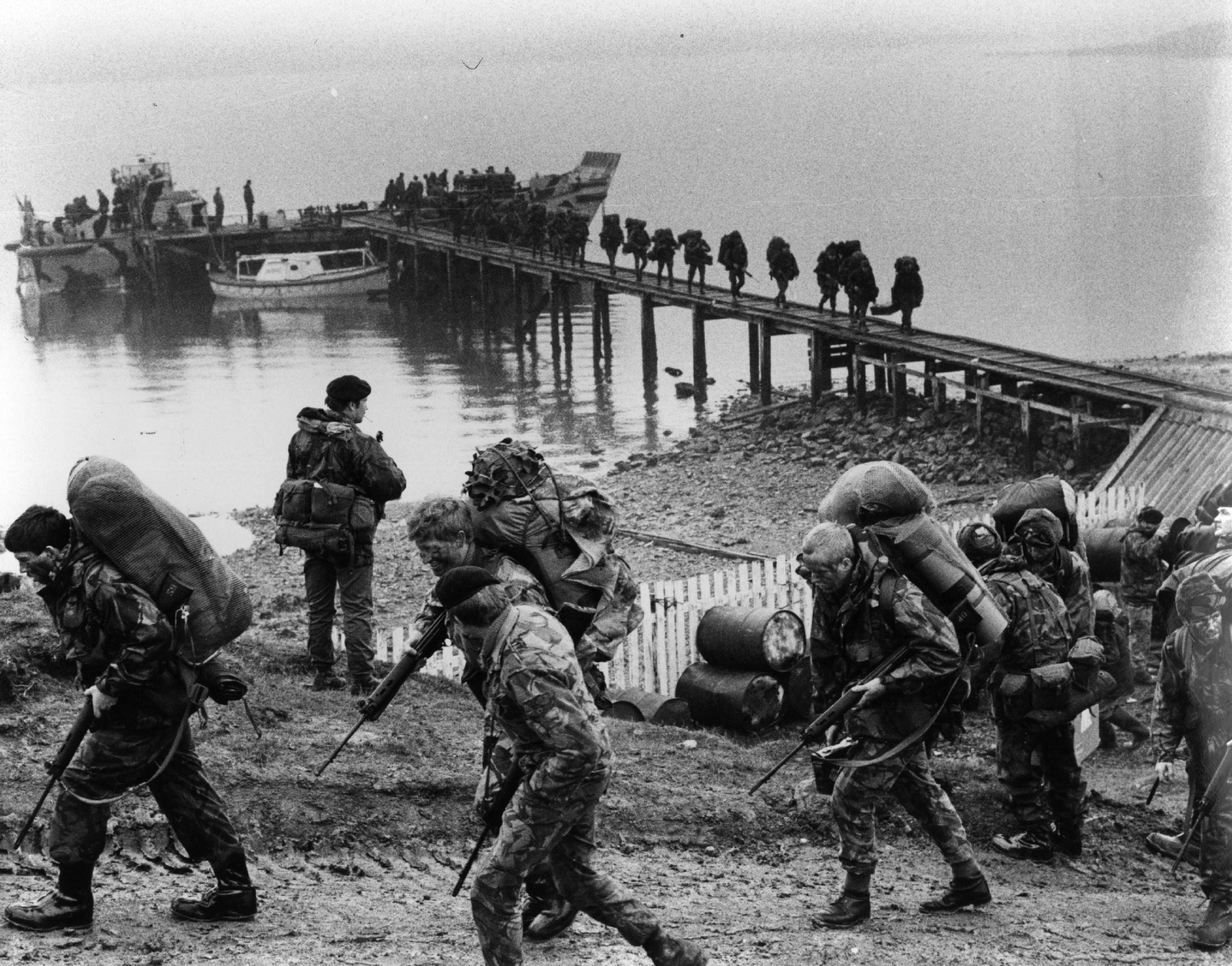
Argentina made its first claim to the islands in 1820, shortly after gaining its independence from Spain, and the islands remained a point of political contention until the military dictator Leopoldo Galtieri finally invaded in 1982.
Britain ousted the Argentine force in the subsequent Falklands War but the issue has remained sensitive since, exacerbated by the Trump administration floating a shift in US policy over the islands.
While the US has long avoid taking sides, earlier this year it emerged that the Pentagon was considering changing its position on the Falklands over what Trump claimed was a lack of support over the unpopular war with Iran.
Trump said on Monday that the status of the Falklands was just “one of many” he was reviewing when asked about the islands’ sovereignty.
A senior US official told The Telegraph that Pentagon officials were understood to be reviewing the commitments of Nato allies in a bid to ensure they commit 5 per cent to defence spending, with the UK to get “special attention” under the assessment.