Every Saturday, children gather in the Indigenous community of Arakwa Iya in Orán, north-western Argentina. Some weeks begin like many other Scout meetings around the world: raising the flag, greeting each other, and saying “always ready!” On alternate weekends, the focus shifts to something equally important: learning the Guaraní language, making traditional crafts, and dancing the pim pim.
Together, these activities have become something unique.
Kaa Oiko, which means “living nature” in Guaraní, is Argentina’s first Indigenous Scout group. Created by Scouts de Argentina with support from World Scouting’s Ticket to Life programme, the group is helping young people build confidence, strengthen their cultural identity, and reconnect with traditions at risk of being lost.
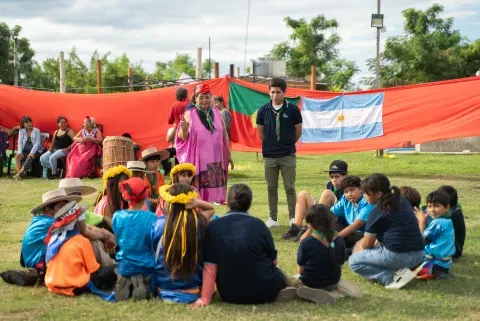
Mónica Rodríguez and Martín speak to Scouts
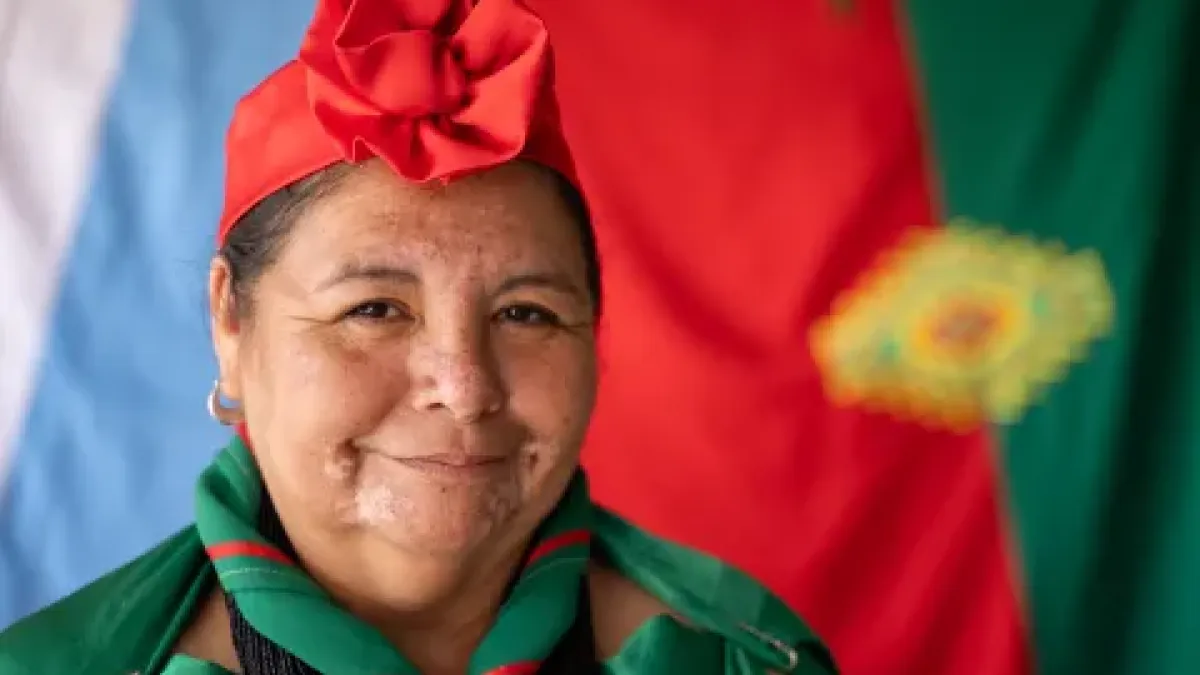
For Mónica Rodríguez, who founded Kaa Oiko and also serves as Scout leader and mburuvicha (the highest authority) of her Ava Guaraní community, the group began with the desire to help young people build a better future.
“We saw children drifting towards drugs, and we wanted to find a way to change that,” she explained. After meeting local Scout leaders, Mónica realised Scouting could offer just that.
“I felt it would be a good way to help young people,” she said.
Today, the Scout group welcomes children regardless of their circumstances. When families worry they cannot afford to take part, Mónica finds solutions.
“I tell them they don’t have to pay,” she explained. “We’ll sell something together or find another way. The important thing is to keep them included.”
Mónica Rodríguez
The group also provides a space where Indigenous culture is actively woven into activities.
Across many Ava Guaraní communities, traditional knowledge is slowly fading, and fewer children are growing up speaking the language at home. To help reverse that trend, Mónica introduced workshops where local teachers and Guaraní speakers help children learn the language through traditional crafts.
“We start with Scout activities,” she explained. “Then we have time for language, crafts, and culture. Or we alternate: one Saturday Scouts, the next Guaraní culture. Making necklaces, practising the language … and sometimes the children just love dancing pim pim. That’s part of our cultures.”
For 22-year-old Scout Martín, the group transformed far more than his weekends.
“Before, my life was … doing nothing,” he said. “Since I joined Scouts, we started doing activities together. We sold cookies, learned to cook, and did things for the community.”
The experiences helped him develop confidence and new skills.
“I lost my shyness,” Martín said. “I learned different things: values, activities … we did many activities, for example, we wanted to do planting on the sidewalks of houses. A lot of nice things.”
Just as importantly, Scouting helped him reconnect with his cultural background.
“What worried me was that we were losing our Ava Guaraní culture,” he explained. “We wanted to recover it little by little so today’s young people could know what it was like before.”
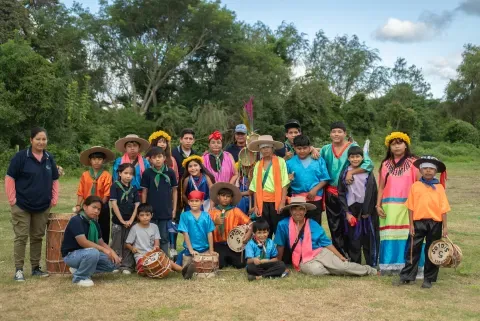
Ava Guarani Scouts
Kaa Oiko also reflects the broader purpose of World Scouting’s Ticket to Life initiative, which provides vulnerable children and young people with safe spaces in which to grow and learn through play, socialisation, and the development of key life skills. In Argentina, Kaa Oiko demonstrates how Scouting can respond to a community’s unique strengths and needs while empowering young people to shape their own futures.
For Mónica, watching young people grow in confidence is the group’s greatest achievement.
“They’re no longer afraid,” she said. “They can go out, show who they are, show our culture. I tell them they should never feel ashamed of being Indigenous or of being Scouts. It’s something to be proud of.”
Little by little, more young people are joining Kaa Oiko and embracing their heritage.
“We dance the pim pim without being ashamed,” Martín said.