


In a sleepy village in northern Argentina, some 3,300 metres above sea level, tensions are rising. While Antofagasta de la Sierra’s 2,000 or so residents struggle with a lack of basic services – they have no mains gas or access to electricity networks – mining firms and the Argentinian government reap huge profits from the lithium-rich ground beneath their feet.
Antofagasta de la Sierra, in the province of Catamarca, sits within the Lithium Triangle, the region spanning Argentina, Bolivia and Chile that contains almost 60% of the world’s known lithium reserves. The soft metal is indispensable in global efforts to transition away from fossil fuels because it allows large amounts of energy to be stored in relatively small batteries.
As global demand has surged, far-right populist president Javier Milei has passed the Incentive Scheme for Major Investments, which offers substantial tax, customs and foreign exchange benefits for projects costing over $200m – including in mining.
The results have been dramatic. Argentina now has 68 lithium extraction projects at various stages of development, up from 38 in 2023. Its annual production of lithium carbonate equivalent has risen from 46,000 tonnes in 2023 to 115,000 tonnes last year, with more than a quarter coming from the four projects in Catamarca. Three are in the Salar del Hombre Muerto (The Dead Man’s Salt Flat), just 100 kilometres from Antofagasta de la Sierra.
Catamarca’s economy is overwhelmingly shaped by mining. The sector accounted for 93.5% of the province’s exports last year, totalling $351m, a figure that looks certain to rise this year, having reached $297m by the end of May. Yet for those in Antofagasta de la Sierra – some 600 kilometres from the provincial capital and 1,600 kilometres from Buenos Aires – the mining boom has brought little visible investment infrastructure. Access to electricity and gas remains limited, while lithium extraction has been accused of polluting the area’s water.
“Investments favour some over others, and are not distributed fairly. Services are very scarce,” Elizabeth Mamani, a craftsperson and member of the Atacameños del Altiplano indigenous community, told openDemocracy.
Weeks before we spoke, Mamani joined other parents from the village blocking Route 43, the road linking Antofagasta de la Sierra with Salar del Hombre Muerto. For two days, they waved signs reading, “A town rich in mining, poor in education” in protest at the low budget that provincial authorities had allocated to the local primary school’s canteen. The local government increased the allocation from $0.6 to $2.7 per pupil after the protest.
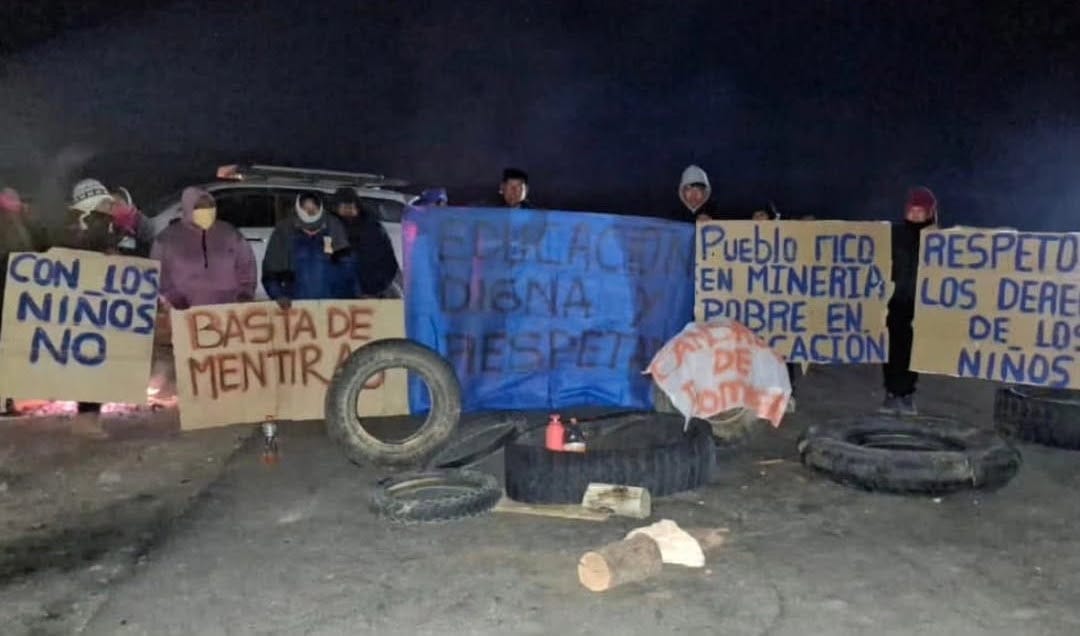
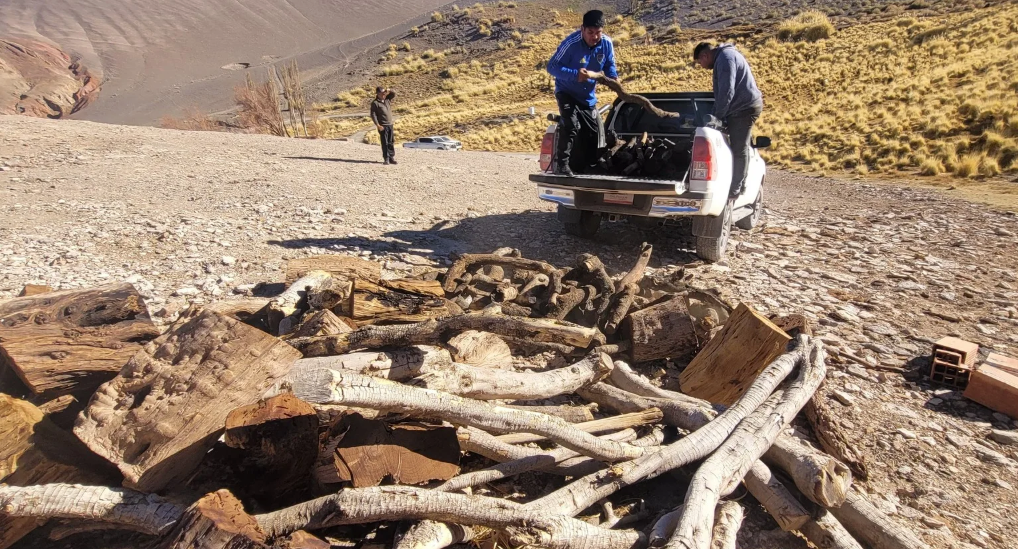
Yet the lack of resources extends far beyond education. Despite Argentina’s vast natural gas reserves, access to the gas network is highly uneven. In some provinces, close to 80% of households are connected to the network, compared to less than 5% in others – in Catamarca, it’s barely 15%. Antofagasta de la Sierra is cut off entirely from the network; 80% of its households rely on gas cylinders and 15% on firewood, according to the most recent census in 2022.
Similarly, although work is underway to connect the village to the electricity grid, for now residents are still forced to rely on combustion generators. “Every time we turn on a heater, we hope the power doesn’t cut out. We have to make do with firewood. There are many shortcomings,” said Mamani, whose family runs a local guesthouse.
Broken promises
For more than a decade, residents of Antofagasta de la Sierra have been promised the area’s growing lithium industry would bring gas to their homes.
Lithium mining arrived in Catamarca long before the soft metal became the subject of fierce competition among global powers. Operations began at Salar del Hombre Muerto in 1997, when Argentine mining company Minera del Altiplano – then a subsidiary of US corporation FMC – was granted a licence to run the Fénix project.
In 2005, Minera del Altiplano announced its intention to invest in a pipeline to deliver gas from Salta, the neighbouring province, to its Fénix plant in exchange for a federal tax rebate on exports. “The idea is that the Catamarca government can then extend this gas pipeline westwards across its province to Antofagasta de la Sierra,” the firm’s then vice-president, Daniel Chávez Díaz, told a meeting of the national Chamber of Deputies.
Plans for the Salta-Fénix gas pipeline were finally officially announced in May 2013. Months later, Minera del Altiplano signed an agreement with Catamarca’s then governor, Lucía Corpacci, to use lorries to transport gas from its Fénix plant to a hub in Antofagasta de la Sierra – known as a “virtual pipeline” – as well as donating $500,000 to the community for ancillary works, such as domestic gas networks.
“The people of Antofagasta will no longer have to go on long journeys in search of firewood or struggle to find a gas cylinder,” Corpacci promised at the time. On another occasion, she said: “This breaks the taboo that mining was a sin.”
The Salta-Fénix pipeline began operating in 2015, but the homes, schools and businesses in Antofagasta de la Sierra never received any gas. In 2021, then MP Hugo Ávila called on Catamarca’s government to explain why the plans had stalled. “They never replied… information is being withheld,” Ávila told openDemocracy.
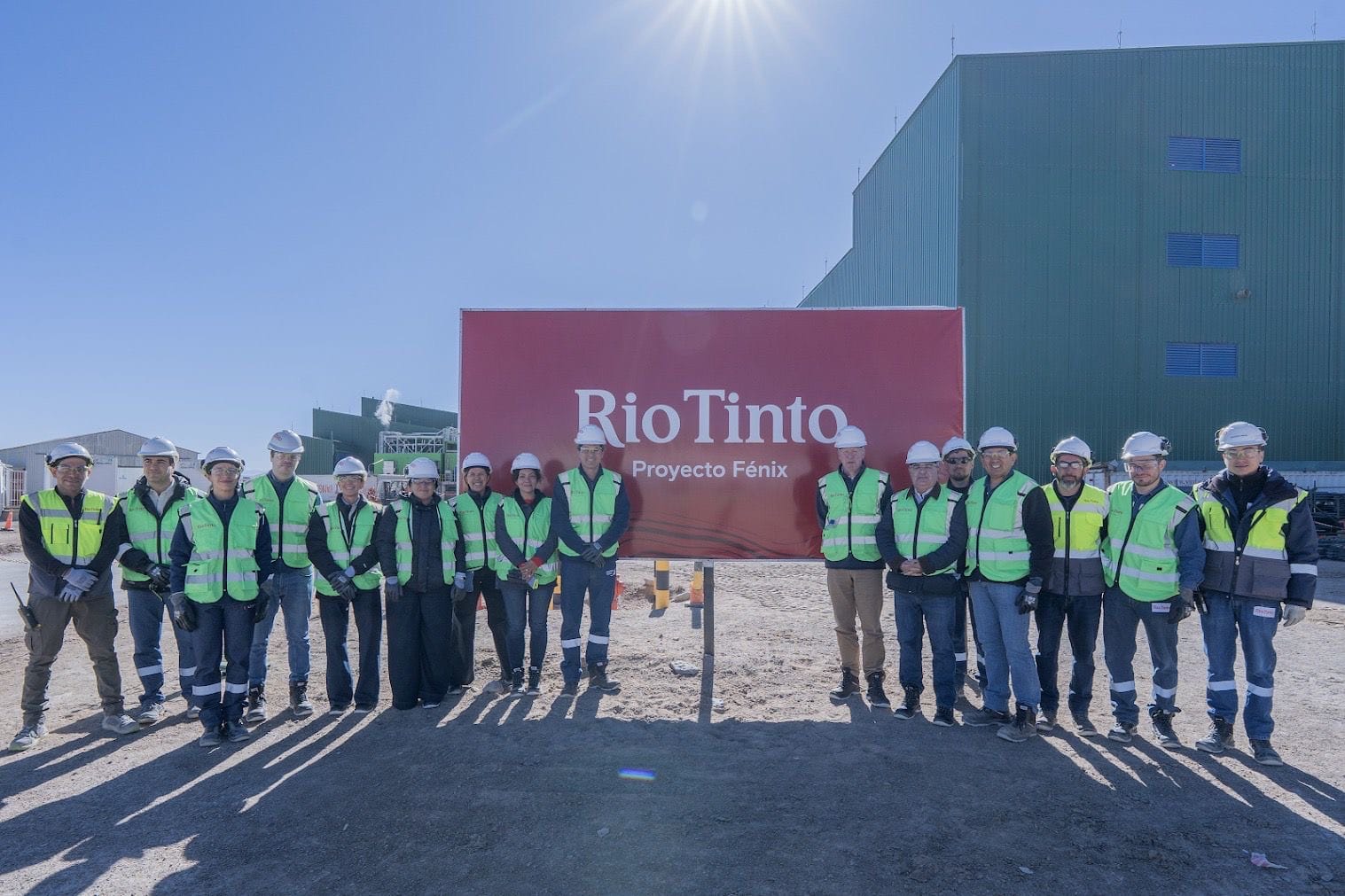
The answer could lie in the fact that Minera del Altiplano has since changed parent companies several times as global corporations race to exploit natural resources. Most recently, the company was acquired by Anglo-Australian mining giant Rio Tinto in 2025.
Rio Tinto, which became the world’s third-largest lithium producer after the acquisition, has not publicly mentioned the deal its predecessor FMC made to supply gas to Antofagasta de la Sierra, and did not answer our questions on the matter. Corpacci, now a national senator, also did not respond.
The current Catamarca government has ruled out gas supply in the village as a priority. “The project remained unfinished; the province must carry out a technical review of its current feasibility,” the province’s Ministry of Mining told openDemocracy in a written response. “Today, the clear energy priorities are more closely linked to electricity generation, solar farms, generators and energy optimisation.”
Antofagasta de la Sierra’s mayor, Mario Cusipuma, now wants a pipeline to be funded by Canadian company AbraSilver, which is developing a project to mine silver and gold in Salta and Catamarca. “When they reach the production phase, the first thing I’m going to ask them for is that project,” he told openDemocracy.
Mineral wealth
“Mining is one of the keys to growth,” said Catamarca’s current governor, Raúl Jalil, in May.
But official figures show that as of February this year, the sector employed only 3,406 people in the province, out of a total population of 430,000. Around half worked in lithium mining, and 80% were men.
In Antofagasta de la Sierra, almost a quarter of the population – around 450 people – were either directly or indirectly employed in mining last year, according to provincial government data. But jobs are mainly limited to the construction phase of projects, and it’s not easy for local workers to meet the demand for more skilled labour.
“Mining activity is expanding so rapidly that, when it comes to skilled labour and local suppliers, we are lagging slightly behind,” said Cusipuma, the village’s mayor, who has been in office since 2023. He mentioned some ongoing agreements with universities to train workers and discussions with trade unions and the provincial government, adding: “Antofagasta de la Sierra was neglected for years. We are in a transition phase, aiming to ensure that 100% of the mining resources remain here.”
In theory, besides jobs, Catamarca benefits financially from the mining of its resources. Companies must pay local governments a fee for the use of public water, though Minera del Altiplano failed to pay its water charges in the province for 18 years, until its then parent company, FMC, reached an agreement with the province in 2015.
Argentina’s provinces receive royalties equal to 3% of the value of the ore extracted from them, and up to 5% for new projects, as well as a share of the corporation tax and export duties collected by the state. In total, Catamarca captures 10.9% of the tax revenue generated by lithium mining, according to a report by the Fundar think tank.
But there are concerns that the national government, and therefore the provincial governments, are not benefiting from the full value of resources mined in Argentina. In 2023, Argentine Customs fined Minera del Altiplano around $20m for under-invoicing lithium exports. The matter went to court and the company and its former chair, Luciano Mancuso, were last year indicted for smuggling 146 exports of lithium carbonate out of the country at between 30% and 45% below market value in 2022 and 2023, causing Argentina to lose more than $200m in tax revenue.
Minera del Altiplano’s new parent company, Rio Tinto, which inherited the legal proceedings, appealed the indictment. In a press release, it said it “recognises and respects the regulations applicable to this type of legal proceeding in Argentina and is committed to complying fully with them […] However, we consider that these charges are without foundation and we firmly maintain that no irregularity has been committed.”
Where royalties are paid to provinces, local governments can decide how they are disbursed. Since 2020, Catamarca has not allocated its agreed shares of 35% to departments, instead channelling funds to a trust it manages and uses to finance infrastructure projects that it decides on. The province’s opposition legislators and Antofagasta de la Sierra mayor Cusipuma believe departments should regain control of the funds for use as they see fit.
“Mining funds are significant, but they do not, on their own, address all the needs,” the provincial Ministry of Mining told openDemocracy. “Mining does not automatically eliminate structural deficits. That is why the province is constantly working to improve planning, prioritise critical projects and ensure transparency regarding the allocation of funds.”
The ministry highlighted projects carried out with the trust fund, such as solar parks, the restoration of a reservoir, the building of bridges and a new hospital, the purchase of municipal vehicles and generators, paving, electricity supply, repairs to schools, and improvements to water and sewage networks. But some of these projects have raised questions. A solar park built to supply Antofagasta with energy in 2019, with an investment from the trust fund of close to $1m, was inactive for a long time and today operates at only 30% of its capacity, Cusipuma says.
Water dispute brought before the Supreme Court
In 2024, the Catamarca Court of Justice suspended the granting of new mining permits in the Salar del Hombre Muerto for two years, after a lawsuit was co-filed by an organisation representing the Indigenous Atacameño people – Elizabeth Mamani’s community – and the Assembly of Catamarca Peoples in Resistance and Self-Determination.
The two organisations are concerned by the threat mining poses to the Trapiche river and the Los Patos aquifer, whose waters are used by eight mining projects in the salt flats. They cited the precedent set by the Fénix project in the 1990s, when a dam was built that led to the drying up of the Trapiche river floodplain, causing damage that affected 15 hectares of grasslands and wetlands on which animals such as flamingos and vicuñas depended.
At the request of the Court of Justice, Catamarca’s government submitted an assessment of the combined impact of all the mining projects on the Los Patos aquifer. But the claimants, advised by hydrogeologist Eleonora Calvo, a researcher at the National Council for Science and Technology, said it was drafted based on earlier reports from 2019 and 2021, and failed to consider any new information, data on the size of the underground aquifer, or adequate monitoring of its dynamics and the contribution of rainwater and meltwater.
“There is not enough information to assess the impact that water extraction will have; we only have a figure for the water flow rate, but the size of the aquifer is unknown,” said Santiago Kozicki, the community’s lawyer. Their complaints were not addressed, and the Catamarca courts lifted the suspension on new mining permits. The case is now before the national Supreme Court.
“The province is not unaware of the environmental and community concerns. On the contrary, it understands that these must be channelled through the appropriate institutional channels,” the Ministry of Mining told openDemocracy. “Mining can only proceed with controls, technical information, public participation and strict compliance with court rulings.”
Rio Tinto, which also operates the Sal de Vida project 60 kilometres from Fénix and four others in the provinces of Jujuy and Salta, told openDemocracy it “remains committed to the responsible development of its operations, the protection of the environment, the promotion of sustainability and a respectful and ongoing relationship with local and indigenous communities.”
It added: “We continue to operate in accordance with applicable regulations, the relevant assessment and monitoring processes, and our global environmental and social performance standards.”
Antofagasta de la Sierra is not the only town where discontent over mining simmers. In Fiambalá, 400 kilometres away, the local Chamber of Suppliers protested a failure by Chinese firm Zijin Mining to use local transport services. Local residents also blocked the entrance to Zijin Mining’s Tres Quebradas plant over the pollution its lithium extraction causes to the area’s stunningly beautiful lagoons – a major tourist attraction.
Elizabeth Mamani does not see mining as improving her land. “It fills me with a sense of helplessness to see how it is being destroyed,” she said. “This is my grandparents’ village; this place is beautiful, but we are giving it away for nothing. If only it were a case of ‘they take the wealth; we’ll have the future’, but that’s not how it is. And it won’t be like that.”
Diego Sánchez is an Argentine journalist based between Buenos Aires and London. He has published in La Nación, Perfil and The Buenos Aires Herald (Argentina), The Copenhagen Post (Denmark) and The Latin America Bureau*(United Kingdom). He holds a degree in social communication from the National University of La Plata, Argentina, and a master’s degree in journalism and globalisation from the Erasmus Mundus programme (Aarhus University, Denmark; City, University of London, United Kingdom).


