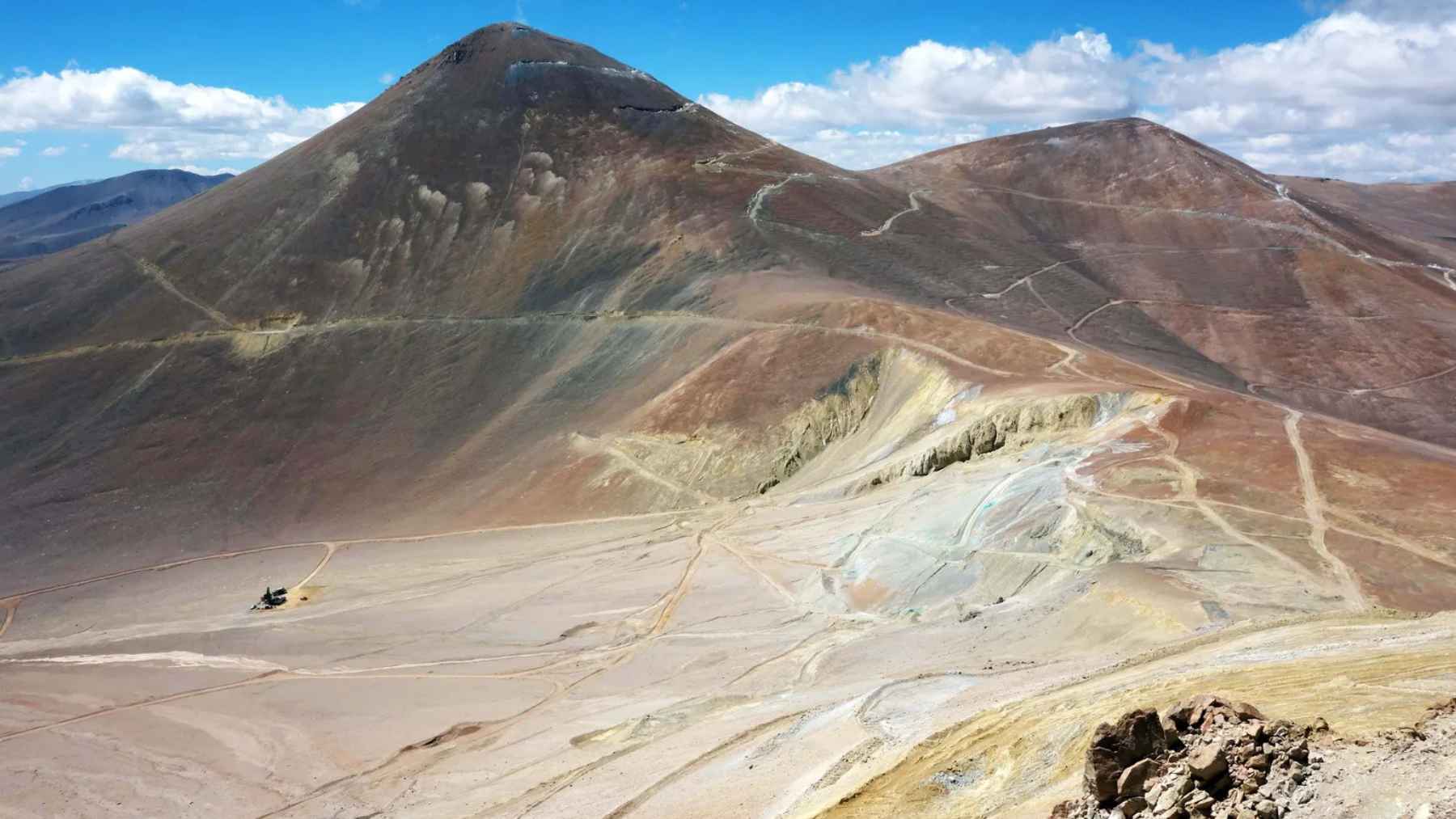
A mineral deposit under the high Andes is forcing a hard question. How far should countries go to secure the metals needed for electric cars, power lines, and renewable energy?
The site is Filo del Sol, part of a wider mining district on the Argentina and Chile border. A 2025 resource estimate turned it into one of the most watched copper, gold, and silver projects in the world, but the same mountain setting that makes the discovery remarkable also makes it risky.
A treasure bigger than expected
The official estimate points to about 14.3 million U.S. tons of copper in the higher-confidence category, along with 32 million troy ounces of gold and 659 million troy ounces of silver. It also lists about 27.6 million U.S. tons of copper in a lower-confidence inferred category.
That wording matters. A mineral resource estimate is not the same as a working mine, but it is a serious geological count based on drilling, mapping, and modeling. In simple terms, measured and indicated resources are the better-tested parts, while inferred resources are promising but still less certain.
Vicuña Corp, the company created through an equal partnership between Lundin Mining and BHP, holds the Filo del Sol and Josemaria projects. Jack Lundin, president and CEO, called Filo del Sol “one of the most significant greenfield discoveries in the last 30 years.” Greenfield means a major discovery in an area not already built around an operating mine.
Why copper matters now
Copper is not flashy in daily life, but it is everywhere. It carries electricity through homes, vehicles, wind farms, solar systems, substations, and power lines.
That is why the discovery lands in the middle of a much larger race. The International Energy Agency says copper demand rises by about 50 percent by 2040 in its net-zero pathway, largely because cleaner energy systems still need physical metal to move power.
Gold and silver add another layer. They are precious metals, but they are also used in electronics, aerospace, telecommunications, and specialized parts where reliability matters. At the end of the day, this is not just a treasure story. It is an infrastructure story.

The mountain is part of the problem
The project is not sitting beside a highway or a coastal port. It has been reported at roughly 16,400 feet above sea level, where cold, thin air, storms, and isolation can turn normal work into a serious logistical test.
That altitude changes everything. Workers can face altitude sickness, while companies must move fuel, machines, food, water, and safety gear into a place where even breathing can feel like work.
Open-pit mining is also a blunt process. It means removing huge amounts of rock from the surface to reach ore below, then crushing and processing that rock to separate valuable metals. The mine may be rich, but getting it out would be neither simple nor gentle.
The water warning
The sharpest concern is water. The original Glacier Law in Argentina was designed to protect glaciers and nearby periglacial areas, which are zones of frozen or partly frozen ground that can store and regulate water like a slow mountain reservoir.
The 2010 law treated glaciers as strategic water reserves and restricted mining, industrial activity, and contaminant releases in sensitive areas. That is why environmental groups are watching the Andes so closely.
The Environment and Natural Resources Foundation, known by its Spanish initials FARN, has argued that weakening the law would reduce protections at the very moment climate pressure is making water less predictable. In dry mountain regions, that is not abstract. It can decide what reaches farms, towns, and rivers downstream.
Mining needs water too
Mining companies often point to recycling systems, cleaner electricity, and improved monitoring. Those tools can reduce damage, and they matter. But they do not erase the basic fact that large mines need a lot of water.
One example from Argentina shows why communities are wary. The same organization identified the former La Alumbrera copper mine as using more than 6.6 billion gallons of water a year, an amount it compared with about one third of the water consumed by all residents of Catamarca province.
That does not mean every new project would use water in the same way. Still, it explains the tension. People may support cleaner energy in theory, but they also worry about drinking water, dust, trucks, noise, and the possibility that a distant project could change daily life close to home.
Cleaner power is not the whole answer
The companies and power providers have started to frame the district as a lower-carbon mining project. Central Puerto and the International Finance Corporation announced work on transmission infrastructure that could supply renewable energy to mining operations in northwest Argentina.
A 2026 technical outline also describes a staged plan that would add major infrastructure, including a desalination plant and pipelines, as the district expands. In practical terms, that means the project is being designed as a long-haul operation, not a quick dig.
Still, cleaner power does not solve every environmental question. A mine can cut diesel use and still affect ice, groundwater, roads, local ecosystems, and communities. That is where the debate gets uncomfortable.
What happens next
Argentina published Law 27804 in the Official Gazette on April 24, 2026, changing how glacier and periglacial protections are applied and giving provincial authorities a larger role. Supporters say the reform could unlock investment and jobs, while critics warn that water safeguards may become weaker.
So the Andes treasure now sits at the center of two urgent needs. The world needs more copper for electrification, but mountain water systems are not spare parts that can be replaced later.
The resource estimate was published on Lundin Mining.